Clay Research and Testing, 2025
As I’ve learned more about clay and glaze characteristics, I’ve had reason to test more and more clay bodies. Here’s what I’ve learned about the clays I’ve tried.
What I pay attention to:
COE and absorption rate:
I look for porcelains with absorption rates of 0.5 or less. <0.5% absorption is very difficult to find in stonewares, so I’ve tried some stonewares with absorption up to 1%. I also look for a high COE (ideally 5.75 or above) to minimize the likelihood of glaze crazing.
For more details on absorption rates and COE, see my post about my clay standards.
Workability and warping:
I make thin-walled, precise pieces. Wheel-throwing these pieces requires a delicate touch and careful trimming, and the resulting pieces can be severely impaired by warping. Different clays vary widely in terms of how easy they are to throw, trim, and handle drying, and how readily they warp.
In terms of workability, here are some characteristics I look for:
Smooth, not sticky: some clays, particularly porcelains, soak up water easily and form a sticky surface that tends to grab fingertips and tools. Luckily, you don’t have to live with this.
“Non-skinning”: some clays (again, most often porcelains) tend to quickly form a thin, tough layer on the outside. This interferes with many handbuilding operations, causing surface cracks and tears even in fully wet work, and makes trimming difficult on wheel-thrown work. I like to be able to smudge the surface of the clay, smoothing/smearing without having to worry about tearing a clay skin layer.
Low shrink rate: most stonewares shrink between 11 and 13%, and porcelains can approach 15%. 15% is hard to manage - you have to throw really large pieces to match target sizes. So all else equal, lower shrink rates are better.
Clay Bodies
Laguna BMix (^5, ^ 10, and wood-fire; all without grog)
I tried BMix because it’s popular in studios for some reason: it was readily available at both studios I inhabited at the beginning of this year. I’ve just thrown a box of the wood-fired variation for a wood firing, but otherwise I’ll avoid it in the future because of its technical properties and frustrating workability.
BMix Cone 10: COE is too low for my comfort; and the absorption a little too high:
COE: 5.2
Absorption: Laguna lists as 1% +/- 1% (so, as much as 2%), and Ceramic Materials Workshop tests it at 1.42.
BMix Cone 10 Wood: good COE, absorption may be too high:
COE: 5.8
Absorption: 1% +/- 1% (so as much as 2%, and not tested by CMW)
BMix Cone 5: COE good; absorption too high:
COE: 5.75
Absorption: 2.3%; CMW much higher at 3.95%.
All three variations throw similarly, and are relatively unforgiving with a major “cream cheese” factor. They are very sticky, take on water readily and generate masses of thick, sloppy slip.
Pieces tend to warp as they dry, even if regularly rotated. I have only been able to achieve precise round forms by periodically straightening them during drying, drying bowls and plates rim-down, etc.
BMix is a little boring when fired, but can flash well in environmental firings.
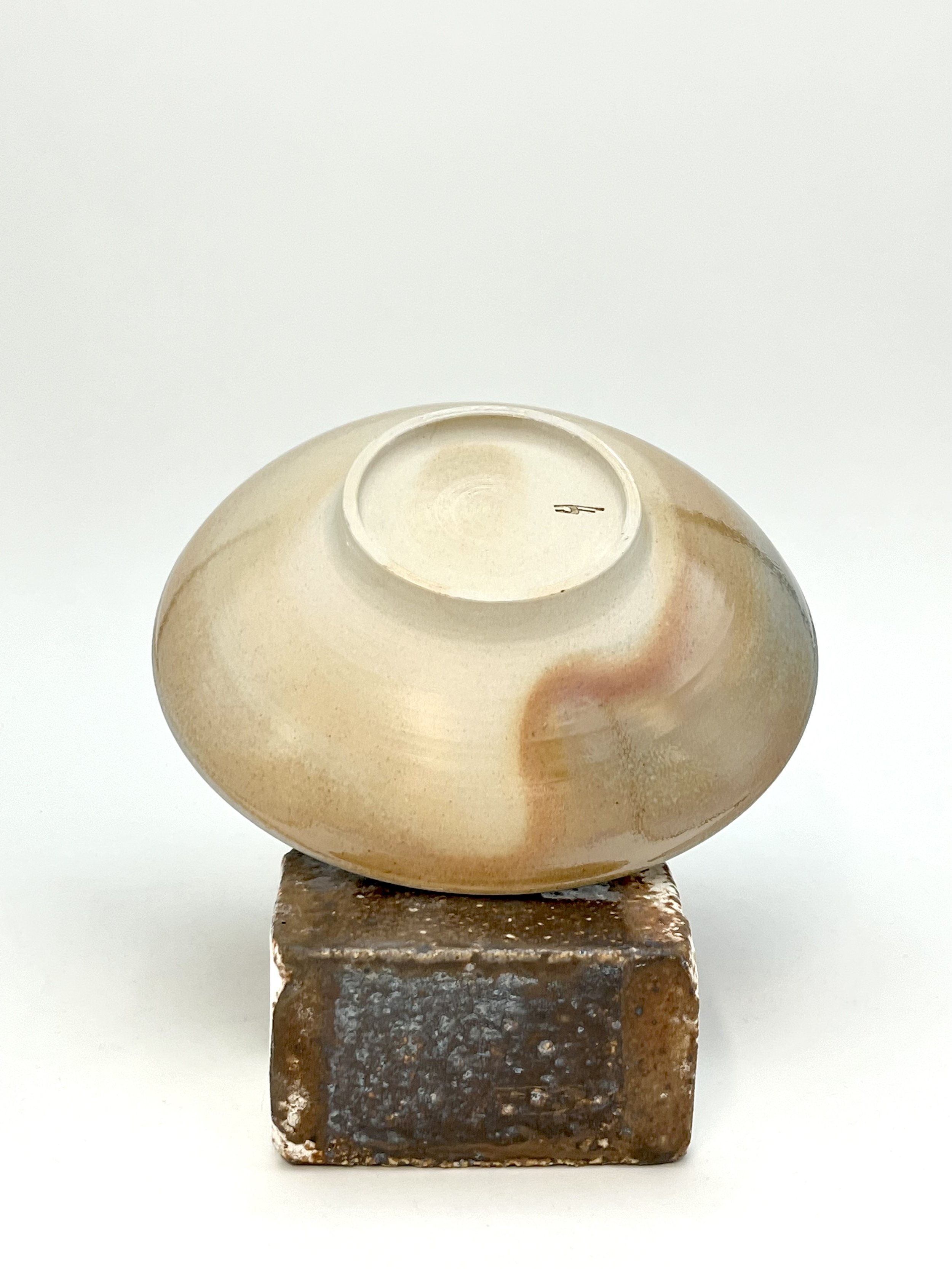
BMix ^10 with nice flashing from a soda firing at Watershed Center For Ceramic Arts, Jan 2025
Laguna/Axner, #900 ^10
Good workability and absorption; worryingly low COE
COE: 4.2. I’m concerned about this long-term; it’s low enough that I expected to see crazing on this clay with some glazes. Indeed: my favorite Dolo-Matte clear glaze seems to be craze-free on it so far, but I have noticed occasional fine crazing when using shino recipes.
Absorption: Laguna lists as 0.6, and Ceramic Materials Workshop finds it to actually be lower at 0.34. That’s really good- better than many porcelains.
I find 900 to be a normal, relatively friendly stoneware. It has enough grog to hold its shape well during throwing, and I didn’t have to do much to manage warping; pieces tended to stay round/flat while drying and stay that way through firing.
The color is a bit odd/frustrating: it’s milk chocolate brown when wet, but fires a mid-light gray with tan/brown edges in reduction. My color results match CMW’s tests, and both are very different from the dark gray/brown shown on the Axner website.
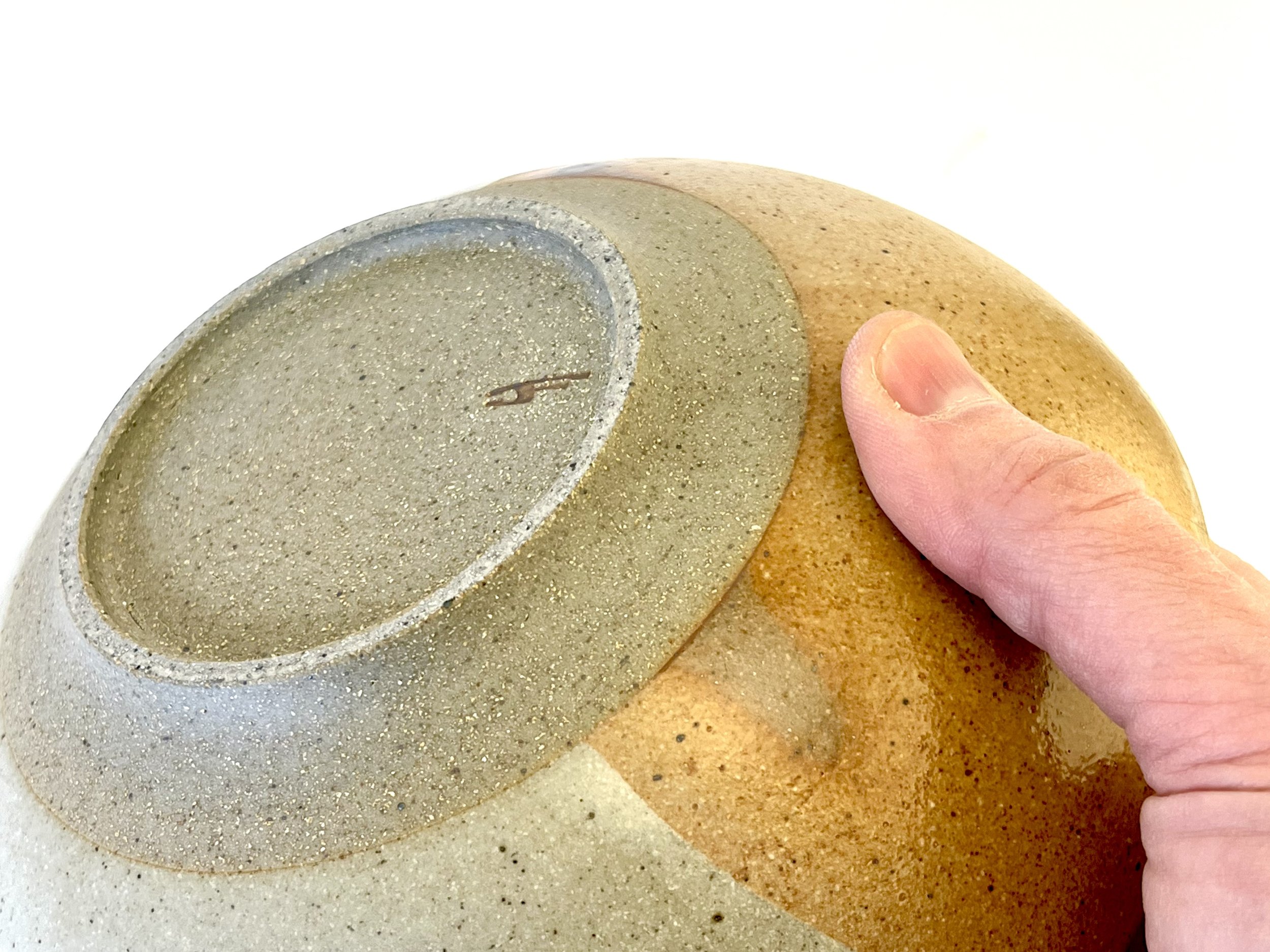
Laguna 900 ^10
Nice stoneware, good properties. Slightly odd color.
KY Mudworks, Roo ^6
Ok workability, ok absorption, hopeful on COE. Seemingly high shrink rate.
COE: unpublished, but hopefully high: CMW tested the similar-looking Tony Beaver at 6.56.
Absorption: KY lists as <1%. Unfortunately, I’m suspicious of this number based on CMW’s testing of Tony Beaver, which KY lists as <0.5% but CMW tested at a whopping 4.5%.
My box of Roo was particularly wet, and I found it awful to work with at first: very floppy and relatively sticky, a terrible combination. I had better luck once I let it dry and firm up a bit. Trimmed well.
All of my Roo pieces tended to shrink more (even when slightly underfired) than the advertised 11%. I also find the fired appearance pretty boring. The combination of these two factors left me searching for alternatives.
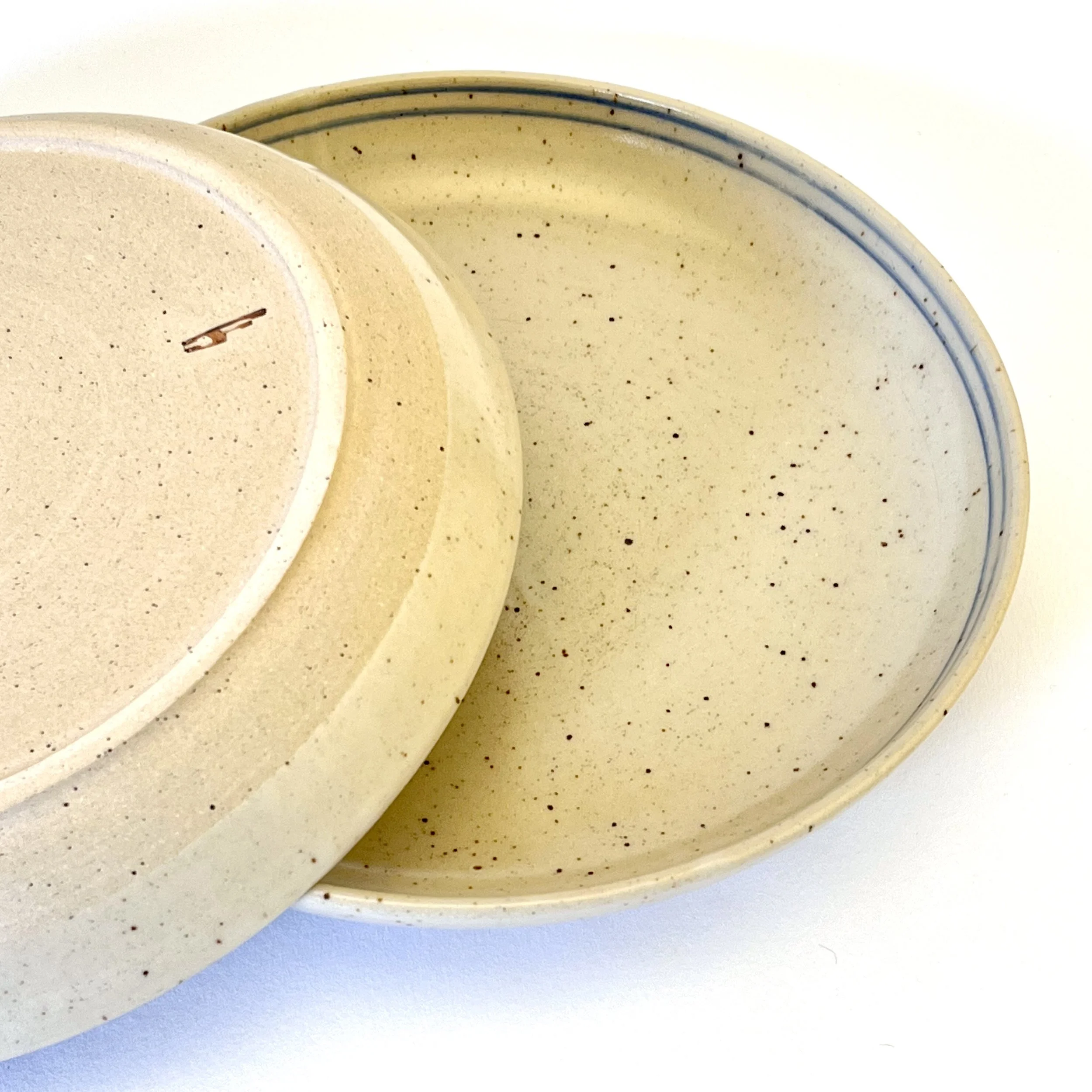
Roo ^6.
“OK” all around.
Laguna, Porcelain 16 ^6
Excellent numbers, but sticky, tricky, warpy.
COE: 5.76
Absorption: Laguna lists as 0.12%; CMW tests at 0.29%.
I used this clay last year and early this year because the numbers are so good, and because Laguna’s tech expert told me it is their most durable clay. But like many porcelains, it’s a pain to work with. It tends to form a dry, crack-prone skin very quickly, making handbuilding techniques difficult. It’s extremely sticky, making it challenging to throw evenly: I had to use a lot of water to keep thin walls from grabbing my fingers and folding/tearing, in turn necessitating frequent passes with a rib to remove the slip/water layer. Even trimming was challenging: if even slightly too wet, pieces tend to grab the trimmer.
I find that my P16 pieces slump/sag when fired to cone 6; I have better luck firing it to cone 5, but that could cause it to miss its low absorbency number. Slightly gray when fired; not as white as some porcelains. Fired surface seems to be susceptible to crystallization especially if used in slow-cooling firing cycles e.g. crystalline glazes; even burnished surfaces got an unpleasant toothy feeling that I felt the need to sand down.
So as good as the numbers on this porcelain are, its workability was problematic enough for me that I’ve moved away from it.
Laguna, Frost Porcelain ^5
COE: not listed
Absorption: not listed
I tried Frost briefly last year because it was recommended to me for my Bones sculptures, based on its whiteness and nice fired finish. It is beautiful when fired, but I encountered severe problems with cracking. 14/17 of the sculptures I made, as well as several of my thrown pieces, developed cracks anywhere between initial drying and final ^5 firing, in unexpected locations (i.e. not standard S-cracks in the base . So much for that.
Standard Clay, 551 V.P. Porcelain
Fancy name, apparently good numbers, good workability
COE: unpublished, but CMW’s tests of two other Standard porcelains indicate it’s probably 6+.
Absorption: Standard lists at 0.3%. CMW hasn’t tested this one, but their tests of other Standard ^6 and ^10 porcelains closely support Standard’s numbers.
I was pleasantly surprised when I tried switching from Laguna P16 to Standard 551 – it’s significantly easier to work with, both in being less sticky and in being almost entirely non-skinning. This means less water required while throwing, which means less floppiness and less need to do slip-removal passes. I was able to do shaping pulls even without water on the surface. Similarly (and I think as a result), easier to trim even when slightly wet. Because it’s basically non-skinning, handbuilding tasks are much easier.
Tends to warp while drying, but responds reasonably well to straightening – in fact, I even had a large bowl that warped during bisque firing un-warp during glaze firing and come out straight/round. So far, excited to keep using this one.
Michelle Wen also has a useful review of 551 here. Thanks Michelle!
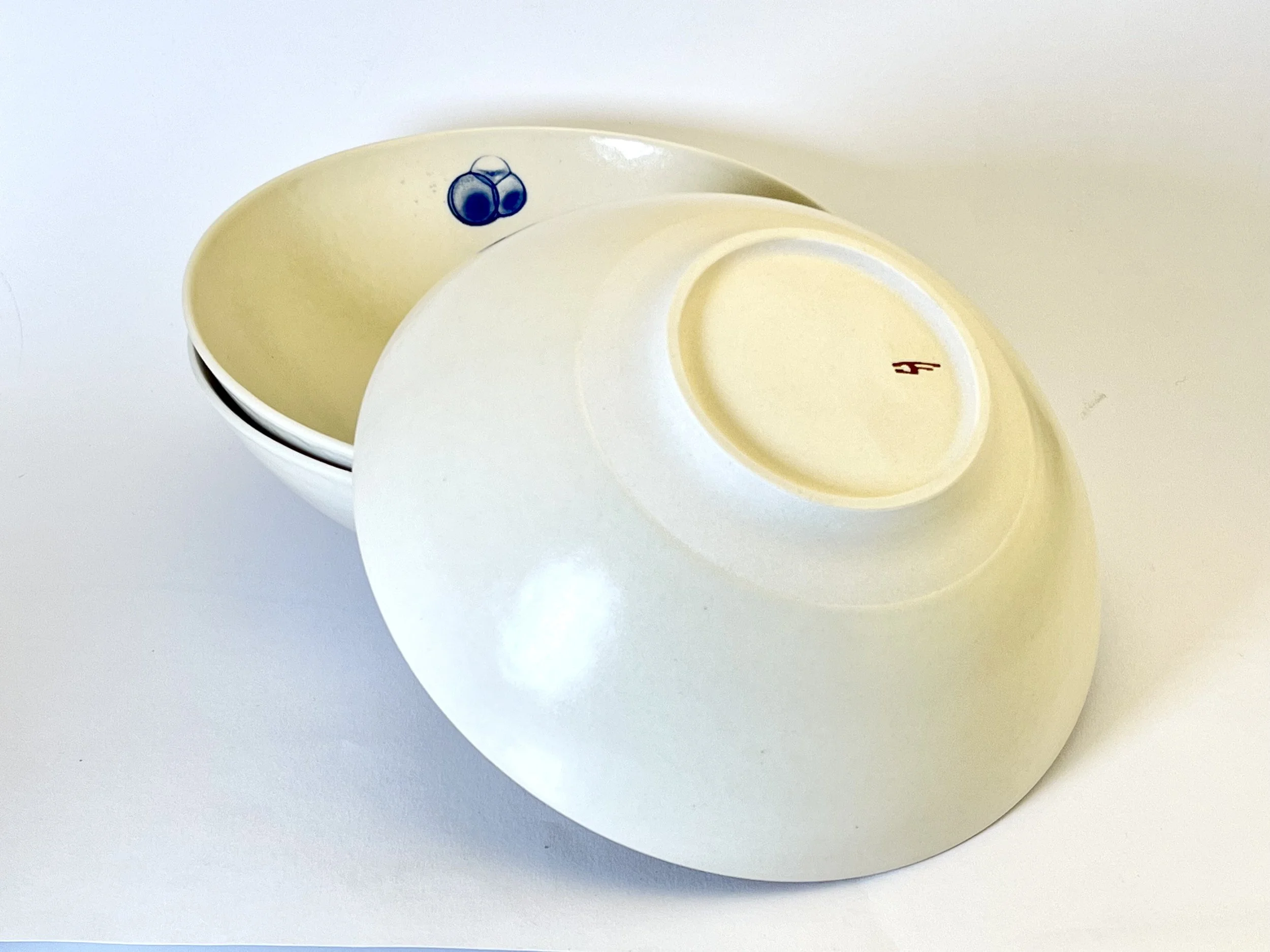
Standard Porcelain 551 V.P. ^6. Quite a mouthful, but my current go-to. Good workability, reasonable color and finish.